How to sell the ISL in 124 days
With two teams gone and no guaranteed rights fee, the clubs put every match on YouTube.

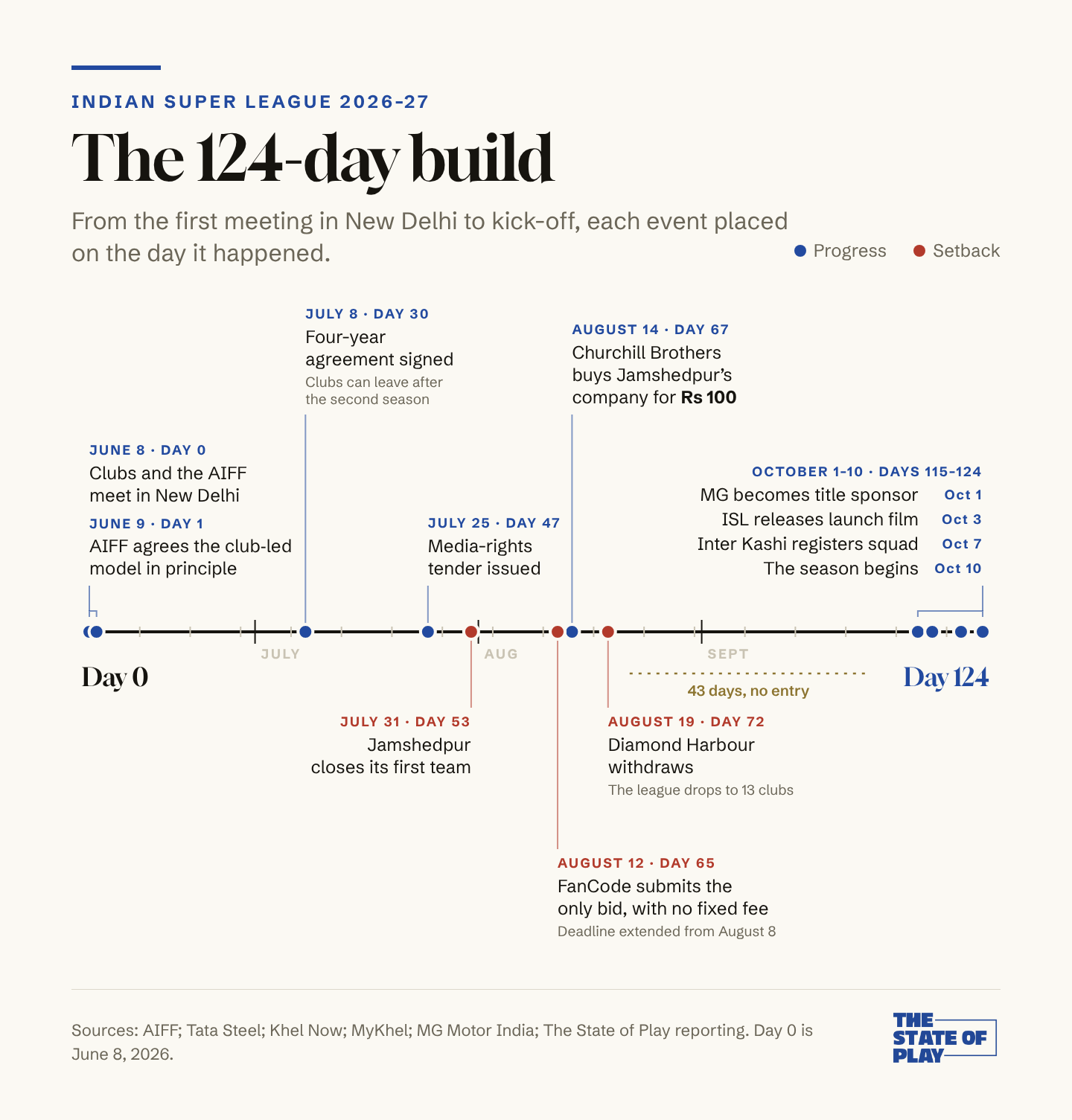
By late June, the next Indian Super League season fitted inside a pitch deck. It listed 14 teams, including Jamshedpur FC and Diamond Harbour. The company that would run the league’s business had not yet been formed. The fixtures were unfinished, several venues unresolved, and there was no broadcaster to name.
Club executives carried the deck from one sponsor meeting to the next. Every conversation soon reached the same question: “Who’s the broadcaster?”
The clubs had no answer yet. Darren Caldeira of Bengaluru FC told brands that things would “look better in the next couple of weeks”, even as he and the other executives tried to work that out themselves. They were speaking to FanCode, Sony and Zee, learning how each company valued a league the clubs had never sold. YouTube had been part of the discussions from the start.
On August 12, FanCode sent in the sole formal bid for the media rights. It included no fixed fee, according to people familiar with the negotiations. FanCode proposed sharing whatever revenue the ISL made.
The clubs knew how an empty tender felt. Nine months earlier, the All India Football Federation (AIFF) had invited companies to replace Football Sports Development Limited, the Reliance-backed operator that ran the league for 11 seasons. That deadline passed without a bid.
The previous season had been put on hold. Now the clubs were asking brands to trust them with the competition.
This time, the clubs were paying. Thirteen of them would own the league company, pay its central bills and cover any loss. No broadcaster had committed a rupee. The cameras, crews and travel would need paying from opening day. They had 124 days to assemble India’s first top-flight football league commercially controlled by its clubs. Any of them could leave after the second season.
“If there’s no league, there’s no club,” Caldeira said.